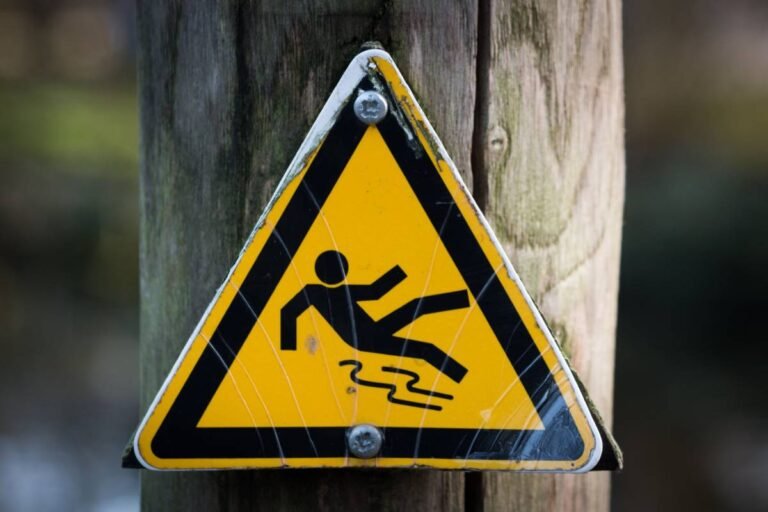



In recent years, mental health has become an increasingly important topic in the context of working life. Stress, time pressure, high expectations, and lack of work–life balance are now among the main risk factors for employees. Traditionally, workplace safety has been associated primarily with protection from physical hazards – falls, mechanical injuries, or chemical exposure. However, modern occupational health and safety (OHS) practices emphasize mental well-being as well. Mental health largely determines whether an employee can work safely, efficiently, and responsibly. Did you know that in Finland, cause of an early retirement is most commonly due to mental health issues.
Source: Disability pensions and work ability – Finnish Centre for Pensions
What does mental health really mean?
According to the World Health Organization, it is a state of well-being in which an individual realizes their potential, can cope with normal stresses of life, work productively, and contribute to their community.
In practice, this means emotional stability, the ability to make rational decisions, and to maintain healthy relationships with others. When this balance is disturbed, the risk of mistakes, accidents, and dangerous situations at work rises significantly. Chronic stress, burnout, depression, or anxiety may reduce concentration, slow down reactions, and increase vulnerability to errors. Accidents overall tend to happen when you do not have your mind on the task.
The link between mental health and workplace safety
- Focus and attention
Many jobs require constant vigilance – drivers, machine operators, construction workers, or healthcare staff must react quickly and accurately. Stress and fatigue cause distraction, which significantly raises accident risks. - Decision-making
A mentally stable person makes decisions based on knowledge and experience. Anxiety, pressure, or low mood may lead to impulsive actions or decision paralysis. - Team relations
Mental health also shapes the atmosphere in the workplace. Conflicts, tensions, or poor communication may cause unsafe situations – for example, when colleagues fail to warn one another about hazards. - Stress resilience
In demanding conditions – shift work, overtime, or crisis situations – employees who care for their mental well-being handle stress better, reducing the likelihood of mistakes.
Occupational safety training as a preventive measure
One of the most important tools supporting both physical and mental safety is occupational health and safety (OHS) training. A good training session goes beyond presenting regulations – it also raises awareness of how stress, fatigue, or conflicts impact workplace safety.
Such training can cover topics like:
- recognizing signs of fatigue and overload,
- techniques for coping with stress,
- guidelines for effective team communication,
- the importance of work–life balance for safety,
- available psychological support procedures in the workplace.
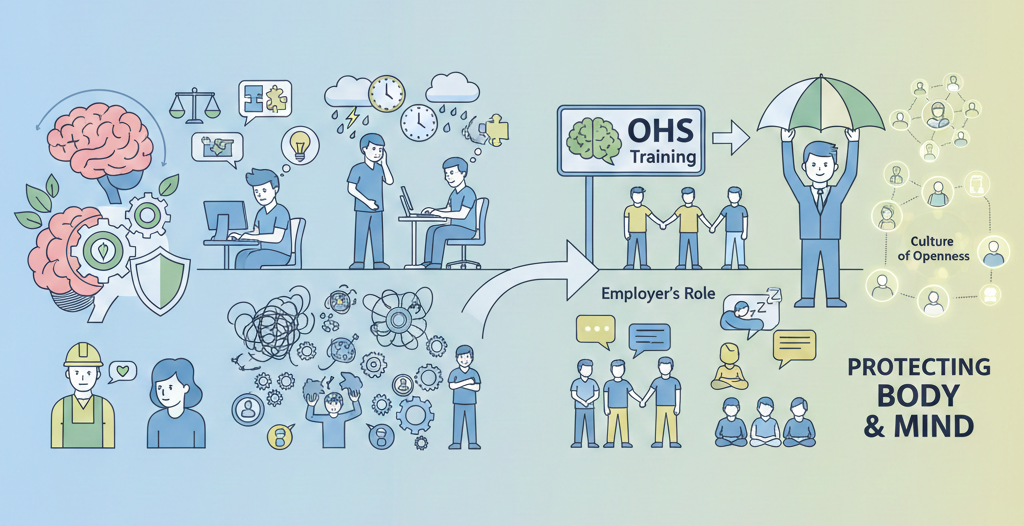
Regular training helps create a culture where safety is viewed holistically – protecting both the body and the mind. It is important to recognize this type of a situation and hence stop the action before things go wrong. As an example once my flight was delayed significantly and I got to Helsinki airport like 4 am and had a 3 hour drive home on a horrible weather. I felt really tired and also a bit frustrated. Instead of hitting the road I hit the sack. Right there at the airport hotel.
Stress as a risk factor
Work-related stress is one of the biggest challenges in modern workplaces. Excessive workload, unclear roles, job insecurity, or toxic workplace culture cause chronic tension. This may lead not only to health problems (such as cardiovascular disease or sleep disorders) but also to higher accident risk.
Research shows that stressed employees more often commit procedural errors and are less likely to follow OHS rules. Stress also lowers motivation and engagement, which in turn affects the overall safety culture in an organization.
Workplace bullying has, for good reason, been a widely discussed topic for years—it is quite a significant problem in Finland. As many as 10% of municipal employees feel they are being bullied at their workplace. That is an enormous number of people.
Workplace bullying is specifically mentioned in the Occupational Safety and Health Act. The law obligates employers to intervene in inappropriate treatment and workplace bullying, as these can endanger an employee’s safety and health. Occupational Safety And Health Act | 738/2002 | Translations of statutes | Finlex
Burnout and workplace safety
In 2019, the World Health Organization recognized burnout as a phenomenon with significant health implications. It manifests as chronic exhaustion, cynicism towards work, and reduced efficiency. A burned-out employee not only has less energy but also pays less attention to safety – both their own and that of their colleagues.
For example, a nurse or doctor suffering from burnout may overlook important symptoms in a patient, while a professional driver might ignore warning signals on the road. OHS training can play an important role here by showing that burnout is not just a personal issue but a real safety risk for the whole team.
The employer’s role in supporting mental health
Employers have both legal and ethical responsibilities to ensure a safe work environment. This covers not only physical protection measures but also actions that support mental health. The most important include:
- Monitoring workload – rational task planning, avoiding excessive overtime.
- Psychological support – access to counseling or employee assistance programs.
- OHS and stress-management training – regular sessions that combine regulations with practical skills for coping with pressure.
- Promoting work–life balance – flexible schedules, remote work opportunities.
- Building a culture of openness – encouraging employees to speak up about difficulties without fear of stigma.
The employee’s role
Responsibility lies not only with employers but also with employees themselves. Every worker should:
- take care of mental hygiene (rest, physical activity, sleep),
- participate in OHS training and apply the acquired knowledge,
- report overload and difficulties,
- support colleagues and help maintain a positive team atmosphere.
Take care of yourself
Eat healthy, sleep well, enjoy the company of your loved ones, and try to do things that make you happy. Make an effort to take care of your physical fitness and exercise regularly. Be kind to yourself as well, and set realistic goals. Here are some good practical tips:
https://www.edemmaksi.com/l/10-helppoa-tapaa-pitaa-huolta-omasta-mielenterveydesta
Legal regulations and standards
Both in the European Union and in Finland, OHS laws also cover psychosocial risks. EU directives require employers to assess every aspect of psychosocial hazards, while the Finnish Labor Code states that employers must protect the health and life of employees. OHS training plays a key role in this process – providing knowledge, raising awareness, and shaping safe attitudes.
Best practices from companies
- Task rotation – to avoid monotony and mental fatigue.
- Regular breaks – short pauses improve concentration and reduce mistakes.
- Training for managers and team leaders – to help them recognize signs of burnout.
- Anonymous surveys and mood assessments – to identify problems early.
The future of OHS – integrating mental health
The modern workplace, especially with digitalization and remote work, creates new challenges for occupational safety. Isolation, constant online availability, and blurred boundaries between work and personal life make mental health one of the core aspects of workplace safety today. Organizations that effectively support employee well-being and provide comprehensive OHS training not only reduce accidents but also increase efficiency, improve reputation, and strengthen employee retention.
Conclusion
Mental health and workplace safety are inseparably linked. An employee in good psychological condition is more attentive, stress-resilient, and cooperative – and therefore safer. Neglecting mental health leads to reduced focus, higher accident risk, and organizational issues.
A comprehensive approach to OHS training is crucial. Training should not be limited to technical rules and regulations but also cover psychosocial factors. Only then can we truly talk about workplace safety – one that protects both the body and the mind.
TVA Occupational Safety Training – TVA Consulting | Safety Trainings
Occupational Safety Card® – TVA Consulting | Safety Trainings