


Part 1 of 3 — Sick Leave and Job Satisfaction: What Absence Data Is Really Telling You
Part 2 of 3 — How Occupational Healthcare Service helps (this article)
Part 3 of 3 — Design an Absence Monitoring System
In the first part of this series we looked at what sick leave patterns can reveal about job satisfaction and workplace health, and why reading absence data correctly requires looking at group-level trends rather than individual records. But understanding the patterns is only half the equation. Someone needs to act on them.
In Finland, that responsibility doesn’t fall on the employer alone. This post looks at how occupational health care providers take an active role in monitoring sick leave, what they’re looking for, and why this system can come as a genuine surprise to workers coming from countries where it works very differently.
A Structural Role, Not Just a Medical One
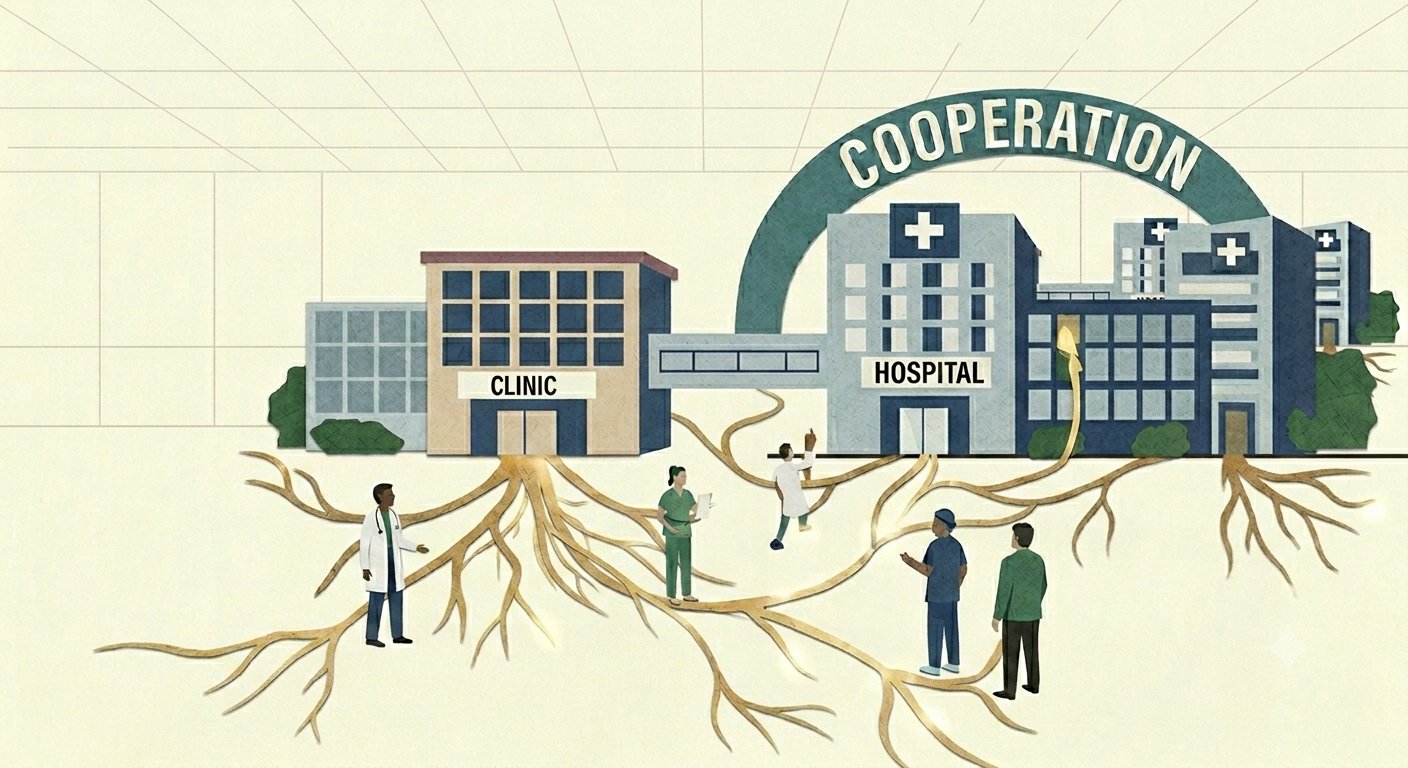
In many countries, occupational health care is essentially reactive: an employee gets sick, a doctor issues a certificate, and the employer files it away. Finland’s system is built on a different logic. Employers are legally required to arrange occupational health services for their employees, and those services are expected to monitor work ability and support early intervention, not just process sick notes after the fact.
This means the occupational health care provider is an active partner that tracks absence patterns over time, cooperates with the employer, and flags cases that warrant closer attention. The specific medical reasons behind an absence stay confidential within the occupational health system, Finnish law is clear on this. What gets shared with the employer is work-ability conclusions and aggregate patterns, not individual health information. The distinction matters, both legally and for trust.
What Occupational Health Professionals Are Looking For
The most informative patterns are rarely a single long absence. They’re the repeated, low-level signals that are easy to explain away one at a time but become harder to ignore when they form a consistent shape over weeks or months.
A classic example is recurring Monday absence. A single Monday off is unremarkable. But the same employee missing Mondays repeatedly, across several months, is exactly the kind of pattern that an occupational health provider is trained to notice and investigate, not to catch someone out, but to understand what’s driving it, because the right response depends entirely on the cause.
Several explanations are worth considering when this kind of pattern appears:
- An informal extended weekend. Sometimes the pattern reflects exactly what it looks like: a habit of stretching the weekend. This is worth naming honestly, because it’s a real and common reason and one that calls for a direct conversation rather than a medical intervention.
- Alcohol-related issues. Recurring Monday absence is also a recognized early indicator of problematic alcohol use. Occupational health services in Finland are specifically equipped to raise this sensitively and connect the employee with appropriate support at an early stage, before the problem escalates into something more serious. This matters particularly in physically demanding or safety-critical roles, where impairment carries risks that extend beyond the individual.
- Family or caregiving strain. Some patterns point toward burnout from caregiving responsibilities that accumulate over the weekend and make returning to work on Monday genuinely difficult.
- Workplace dread or anxiety. In some cases, a Monday pattern reflects anxiety or dissatisfaction that is specifically tied to the start of the working week, a behavioral signal that sits right at the intersection of job satisfaction and mental health.
The pattern itself doesn’t tell you which of these is happening. That’s precisely why it needs to be investigated rather than assumed.
Why This Works Better Than Employers Monitoring Alone
An employer looking at an absence calendar can see the same Monday pattern. What they typically can’t do is follow up in a way that’s clinically informed, legally appropriate, and genuinely supportive rather than punitive. A line manager asking “why do you keep calling in sick on Mondays?” is a very different conversation, with very different power dynamics, than an occupational health nurse or physician asking the same question in a confidential professional context.
The occupational health provider has three things the employer usually lacks: clinical training to recognize when a pattern has a health explanation, the confidentiality safeguards that make it safe for an employee to answer honestly, and over time, a relationship with the employee built outside the hierarchical dynamics of the workplace. This combination is what makes early intervention possible and what distinguishes intervention from surveillance.
What This Means for Workers Coming to Finland
For workers arriving from countries where occupational health care is more limited in scope, Finland’s system can come as a surprise. The idea that your employer’s health care provider is tracking your absence patterns, and might raise a concern with you directly, can initially feel intrusive.
It helps to understand what the system is and isn’t doing. It isn’t a mechanism for the employer to monitor individual health information — the legal boundaries on that are strict. It is a mechanism to catch problems early, whether those problems are physical, psychological, or behavioral, while they’re still addressable, rather than waiting until someone has been off work for months or a safety incident has occurred.
Understanding this system, that it exists to support employees rather than police them, is itself a useful part of safety and wellbeing orientation for anyone new to working life in Finland. Knowing what occupational health care is there to do makes it easier to engage with it as the resource it’s designed to be.
In Part 3 of this series, we get practical: how should organizations design an absence monitoring system that reliably separates meaningful signals from statistical noise and avoids the trap of simply pushing sick leave underground?